⚡ Affiliate Disclosure: We earn a small Amazon commission at no extra cost to you. Prices may vary — always check Amazon for current pricing. Full Disclosure →

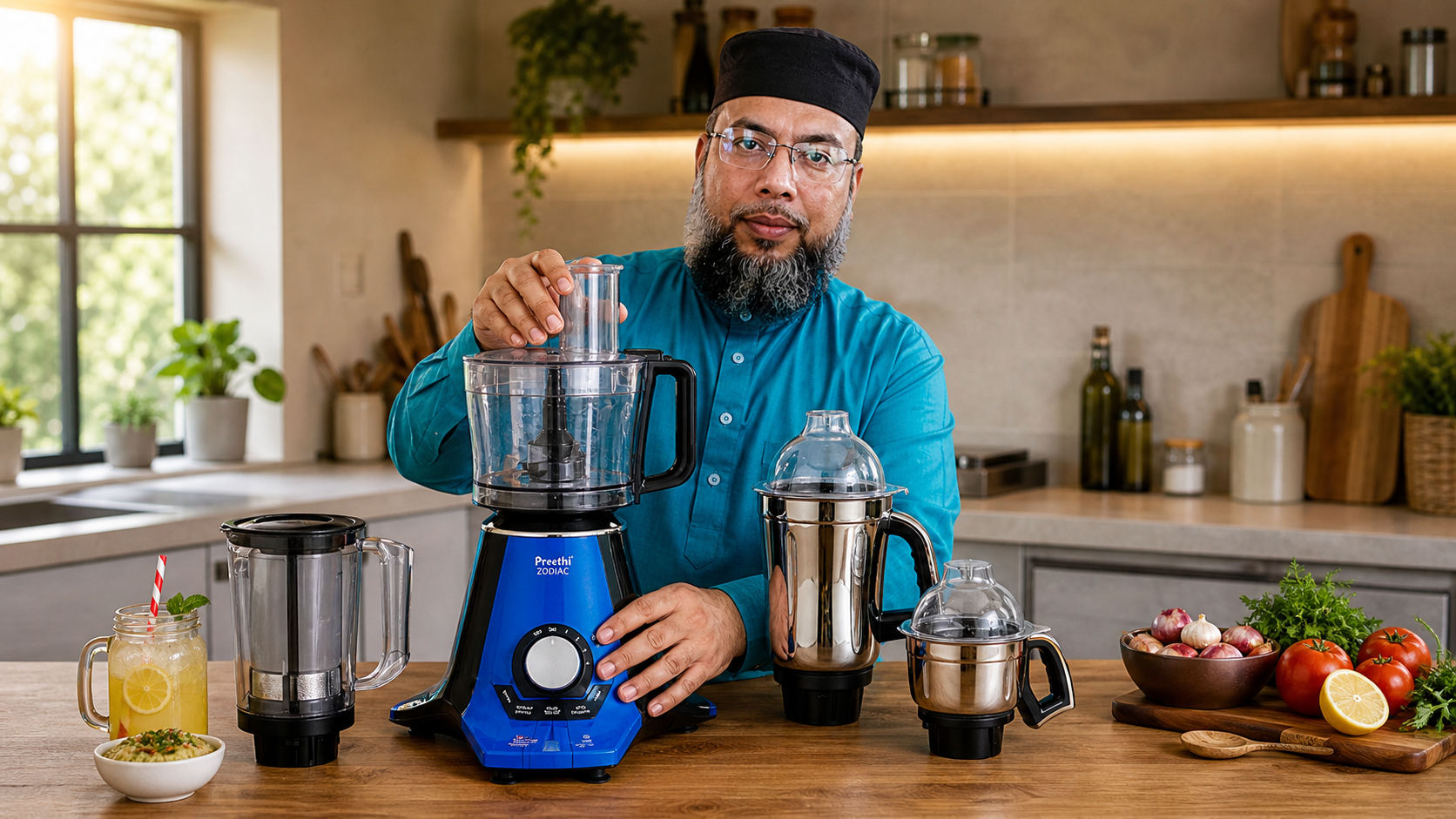

Wet Grinder vs Mixer Grinder:
Which is Better for Idli & Dosa?
Most buyers wonder: do I need a dedicated wet grinder, or will my mixer grinder handle batter just fine? The answer depends entirely on how often you make idli and dosa — and how much the texture actually matters to you. This comparison breaks it down across every factor: batter quality, speed, noise, price, and maintenance. See also: wet grinders guide, best wet grinder India, best mixer grinder India.
Which One is Right for You?
The short answer depends on one question: how serious are you about your idli and dosa?
Wet Grinder
Stone-on-stone grinding produces batter that is smoother, better aerated, and ferments more reliably. If you make idli or dosa 3+ times per week and care about getting hotel-quality results, a wet grinder is worth the investment and counter space.
- Fluffy idlis, crispy dosas every time
- No batter overheating
- Better fermentation due to cooler grind
- Lower electricity per batch
- 5–10 year lifespan for good models
Mixer Grinder
A 750W–1000W mixer grinder can make batter, grind masala, make chutney, and blend lassi — all with one machine. It's faster, cheaper, and occupies less space. For most urban families who make batter occasionally, it's the practical choice.
- Does batter, masala, chutney, paste — everything
- Faster grinding (15–20 min vs 25–35 min)
- Lower initial cost (₹3,000–₹8,000)
- Compact — fits standard counters
- Easy to clean and maintain
Bottom line: If you make idli/dosa more than 3 times a week — get a wet grinder. If it's occasional — your mixer grinder is enough.
Side-by-Side: Every Factor Compared
Eight factors that matter most to Indian home cooks — with an honest winner for each.
Wet Grinder Wins
4 categories
Batter quality, noise, grinding method, motor longevity.
Mixer Grinder Wins
4 categories
Speed, versatility, price, and maintenance ease.
True Verdict
Depends on use
Daily batter maker → wet grinder. Occasional cook → mixer grinder.
What is a Wet Grinder?
A wet grinder uses two cylindrical stone rollers that rotate inside a stainless steel drum. As the drum spins, the rollers crush and rub the soaked grains — a slow, cool process that breaks down cell walls without generating heat. This is why wet-ground batter ferments better: the batter is cooler, and the cell structures are broken more gently, allowing natural yeast activity to proceed properly.
Wet grinders come in table top models (1L–5L for home use) and tilting models (5L–20L for commercial use). For home kitchens, a 2L model is the most common starting point.
What is a Mixer Grinder?
A mixer grinder uses stainless steel blades spinning at 18,000–22,000 RPM inside a jar. The high-speed rotation creates impact force that shatters, cuts, and grinds ingredients in seconds. This blade-based approach is extremely versatile — the same machine can grind dry spices, blend wet chutneys, make batter, and liquify ingredients, just by changing the jar.
A good 750W mixer grinder with a wet grinder jar can make adequate idli batter — but the heat generated during grinding and the coarser batter texture mean it won't quite match a dedicated wet grinder's output quality.
Batter Quality: Where the Difference Really Shows
This is the single biggest reason people buy wet grinders — and it's worth understanding exactly why the difference exists.
- Cooler temperature — Stone grinding generates almost no heat. Batter stays below 35°C — ideal for fermentation.
- Better aeration — The slow rotation introduces air into the batter, making idlis noticeably fluffier.
- Finer, smoother texture — Stone rollers break grain cells more thoroughly than blade impact, resulting in silkier batter.
- Reliable fermentation — Cool batter + intact cell nutrients = faster, more predictable overnight fermentation.
Result
Idlis that are soft all the way through, dosas with an authentic crisp — consistently, every time.
- Warmer batter — Blade friction generates heat. Batter can reach 45–55°C, which slows fermentation.
- Less aeration — High-speed blades don't introduce air in the same way — idlis come out denser.
- Slightly coarser texture — Impact grinding is less thorough on grain cell walls — minor texture difference, noticeable in idlis.
- Fermentation variability — Warmer batter ferments less predictably, especially in cooler weather.
Result
Good idlis and dosas — just not consistently at wet grinder quality. Perfectly acceptable for occasional cooks.
Speed & Convenience
A mixer grinder grinds batter in 15–20 minutes. It's also instant to set up, easy to clean, and doesn't need pre-loading or stone seasoning. For busy mornings or occasional batter-making, the speed advantage is real and significant.
A wet grinder takes 25–35 minutes but once loaded, it runs unattended. You can prep other ingredients while the grinder works. No cooling breaks needed — it grinds the full batch in one continuous cycle without supervision.
Noise & Power
The drum rotation and stone rollers produce a low, steady hum. Wet grinders are apartment-friendly — you can run one early morning without disturbing neighbours.
What's a normal noise level?High-RPM blade grinding is inherently noisy. Running a mixer grinder at 6 AM in an apartment is a genuine concern. BLDC models are quieter (70–75dB), but still louder than a wet grinder.
Silent vs normal mixer grinder noisePrice Comparison
Maintenance & Cleaning
Wet Grinder — More Effort
- Drum must be rinsed immediately after each use
- Stones need to be seasoned when new (3–5 seasoning batches)
- Drum scrubbing to prevent batter residue buildup
- Stone rollers should be wiped and dried to prevent odour
- Annual stone inspection recommended
Mixer Grinder — Easier
- Jars can be rinsed immediately after use — 2-minute clean
- Self-clean: fill with water and run for 30 seconds
- Gasket and blade replacement every 1–2 years
- Motor base only needs occasional wipe-down
- Simple maintenance, widely available spare parts
Which One Should You Buy?
The honest answer based on how you actually cook.
Choose This If:
Wet Grinder
- You make idli or dosa 3+ times per week
- Batter quality and authentic taste matter to you
- You have a South Indian household where batter is made in bulk
- You want quieter grinding (apartment-friendly)
- You don't mind the extra cleaning for better results
- Your family consumes 20+ idlis per batch
Choose This If:
Mixer Grinder
- You make batter occasionally (1–2 times per week or less)
- You need one machine that does everything
- Counter space is limited in your kitchen
- Budget is a priority right now
- You also need to grind masala, chutneys, and dry spices regularly
- Speed and convenience matter more than texture perfection
The Honest Verdict
You don't have to choose just one. Many households own both — a mixer grinder for daily masala and chutney, and a wet grinder dedicated to weekend idli-dosa prep. If budget allows, that combination gives you the best of both worlds with zero compromise.
Quick Answers: Wet Grinder vs Mixer Grinder
Short answers to common appliance questions (updated May 2026)
Frequently Asked Questions
For batter specifically — yes, a wet grinder is definitively better. Stone grinding produces smoother, cooler, better-aerated batter that ferments more reliably. The result is noticeably fluffier idlis and more authentic dosas. However, a mixer grinder is more versatile overall — it handles masala, chutney, dry spices, lassi, and paste in addition to batter. A wet grinder only does one thing well. The question is whether that one thing — batter quality — matters enough to justify the dedicated machine.